
Walk into almost any horse person’s home and you’ll find artwork featuring horses.
A framed print. A canvas. A beautiful black and white portrait purchased from a gallery or home décor store.
What I’ve always found interesting is that many horse owners are willing to invest in artwork of horses they’ve never met, while overlooking the possibility of creating a custom piece featuring the horse they know better than anyone.
That’s what fine art equine portraiture is all about.
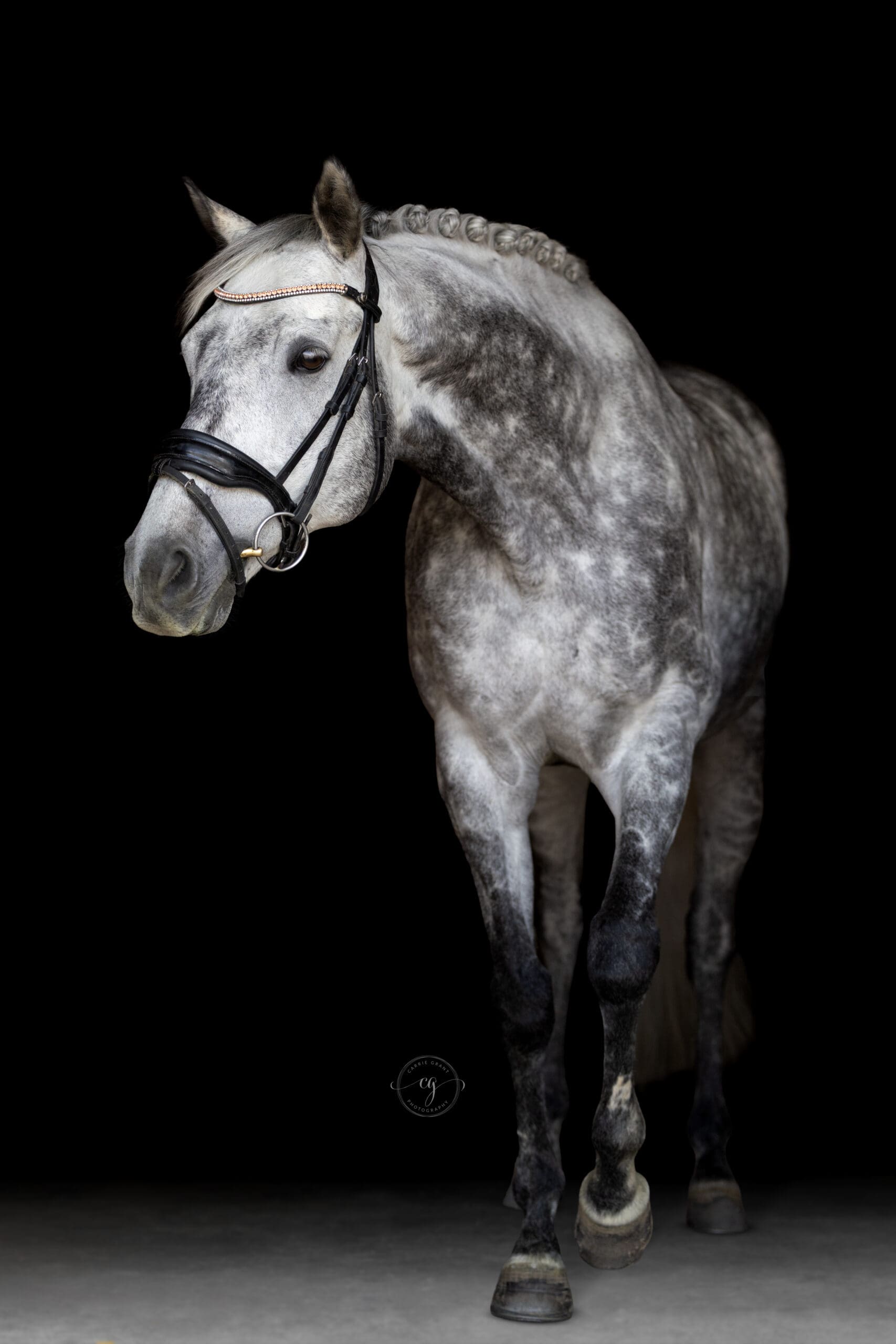
The finished image may look simple—a horse against a black background—but there’s quite a bit that happens before, during, and after the session to create a portrait worthy of hanging on a wall.
It Starts Before I Ever Pick Up a Camera
Every horse is different.
Before the session, I spend time talking with the owner about their horse’s personality, favorite features, quirks, and anything that might affect the session.
Does the horse have a particularly expressive eye?
A beautiful neck?
A distinctive scar that tells part of their story?
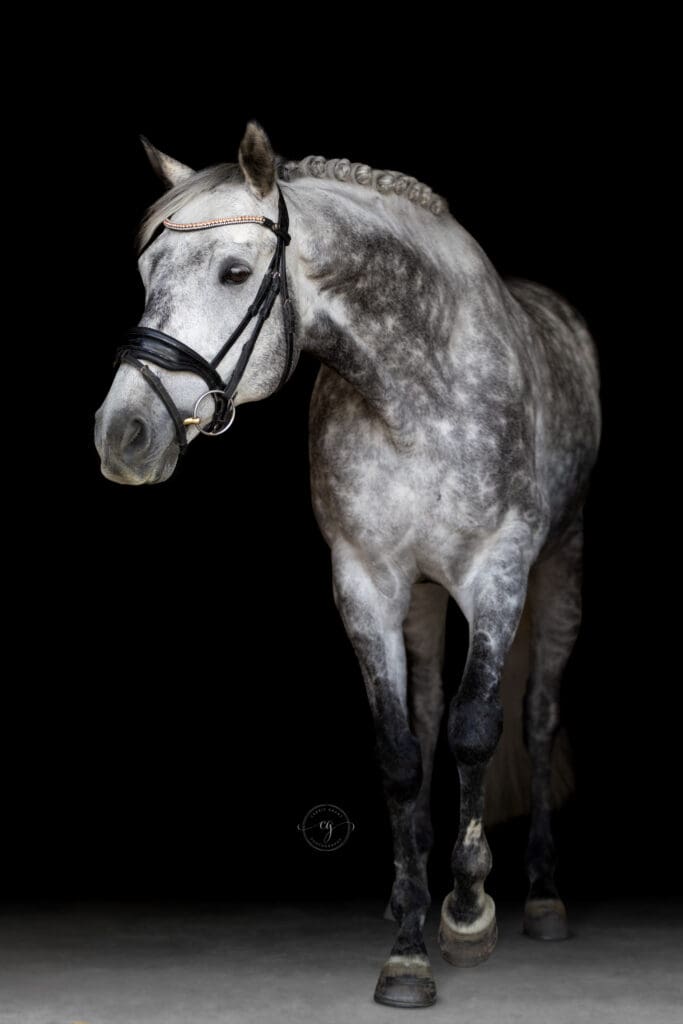
Are they food motivated? Sensitive to sounds? Completely unimpressed by every trick in the book?
We’ll also discuss grooming and tack preparation so the horse is looking their best on session day.
The goal isn’t perfection. The goal is creating a portrait that feels true to the horse.
Finding the Right Location
Unlike my outdoor equestrian sessions, fine art portraits aren’t about scenery.
In fact, I’m usually looking for the exact opposite.
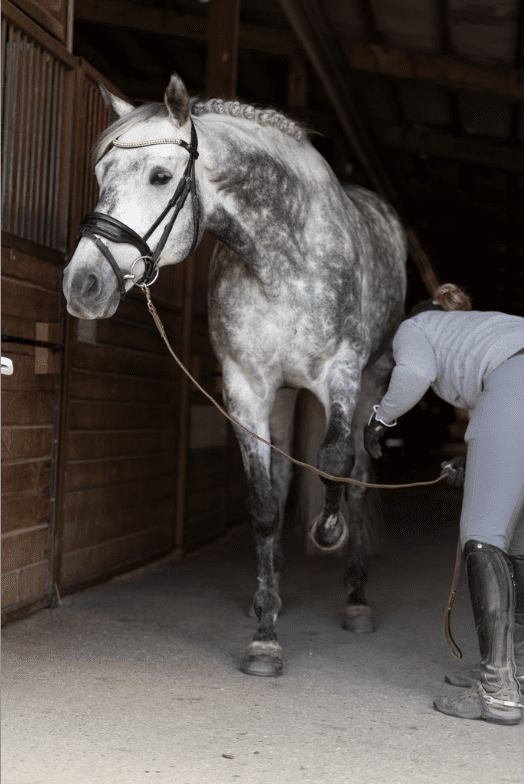
Most often, I photograph these portraits in a barn aisle that is deeply shaded with as little light behind the horse as possible. We close doors, turn off lights, sweep the aisle, and simplify everything around us.
I’m essentially creating the cleanest starting point possible.
Before we begin photographing, I also take a close look at the horse.
If there’s a temporary scrape, mud stain, or small cut, I’ll usually remove it later in editing.
If it’s a permanent marking, scar, or feature that’s part of who the horse is, I generally leave it alone unless the owner specifically asks otherwise. Those details are often part of the horse’s story.
Creating the Pose
One of the biggest misconceptions about horse photography is that horses naturally stand around striking elegant poses.
They do not.
Every portrait you see is the result of patience, timing, and a fair amount of creativity.
Some horses respond to treats.
Some respond to sounds.
Some are fascinated by cat toys.
Some think cat toys are deeply suspicious and should be avoided at all costs.
Part of my job is figuring out what gets each horse’s attention without creating stress or anxiety.
Throughout the session, we work through different poses and angles, always keeping the horse relaxed and comfortable. Some horses have the flexibility and balance to create dramatic poses. Others look best in simpler, more natural positions.
The horse always gets a vote.
Choosing the Final Images
After the session, I sort through the images looking for the portraits that best showcase the horse’s structure, expression, and personality.
This is also where I decide which images will work best with a black background and which may be better suited to a white background, depending on the lighting and the client’s vision for the final artwork.
Often, the final image is actually a composite of several photographs.
A horse may have the perfect expression in one image, a better ear position in another, and a cleaner leg placement in a third.
In many cases, the handler is partially blocking part of the horse, so those areas need to be reconstructed using details from other frames.
The goal isn’t to create a horse that never existed. It’s to create the best representation of the horse that was standing in front of me that day.
Building the Fine Art Portrait
Once the composite is complete, I begin removing the background.
This is one of the most time-consuming parts of the process.
The horse is carefully separated from the barn environment and placed onto a clean black or white background. During that process, fine details like whiskers, ear fur, manes, and tails can be lost.
To restore those details, I use specialized brushes and techniques designed specifically for equine portrait work.
Without that step, the horse can look unnaturally cut out from the background.
After that comes the finishing work.
I refine highlights and shadows, enhance depth and dimension, bring attention to the eye, and make subtle adjustments that help guide the viewer’s attention exactly where it belongs.
The goal isn’t to make the horse look different.
The goal is to remove everything that distracts from who they are.
From Digital File to Artwork
The final step is one of my favorites.
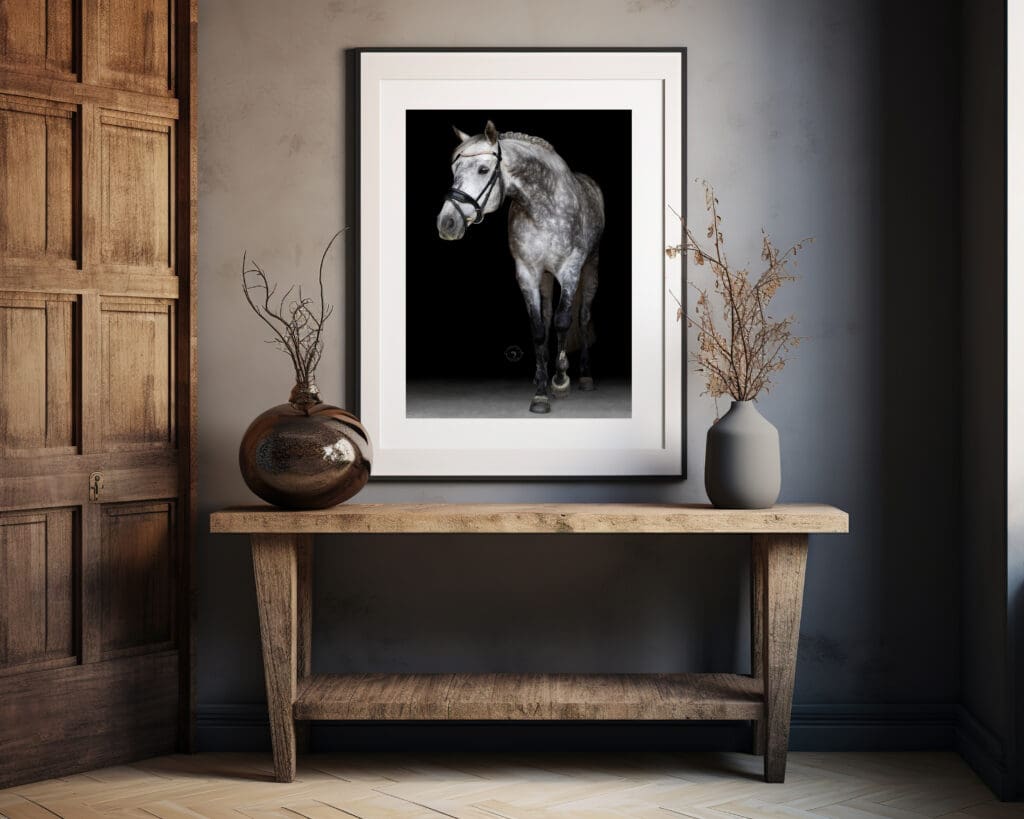
Once the portrait is finished, I work with clients to determine how the artwork will be displayed in their home.
Using wall-design software, I can show exactly what different sizes and images will look like on their walls before anything is ordered.
A portrait that looks large on a computer screen can look surprisingly small above a fireplace or sofa, so seeing it in scale helps clients make confident decisions.
For larger pieces, I even arrange professional installation.
The goal is not simply to deliver a digital file.
It’s to create a finished piece of artwork that becomes part of the home.
Because if you’re going to hang a horse portrait on your wall, it might as well be your horse.


